
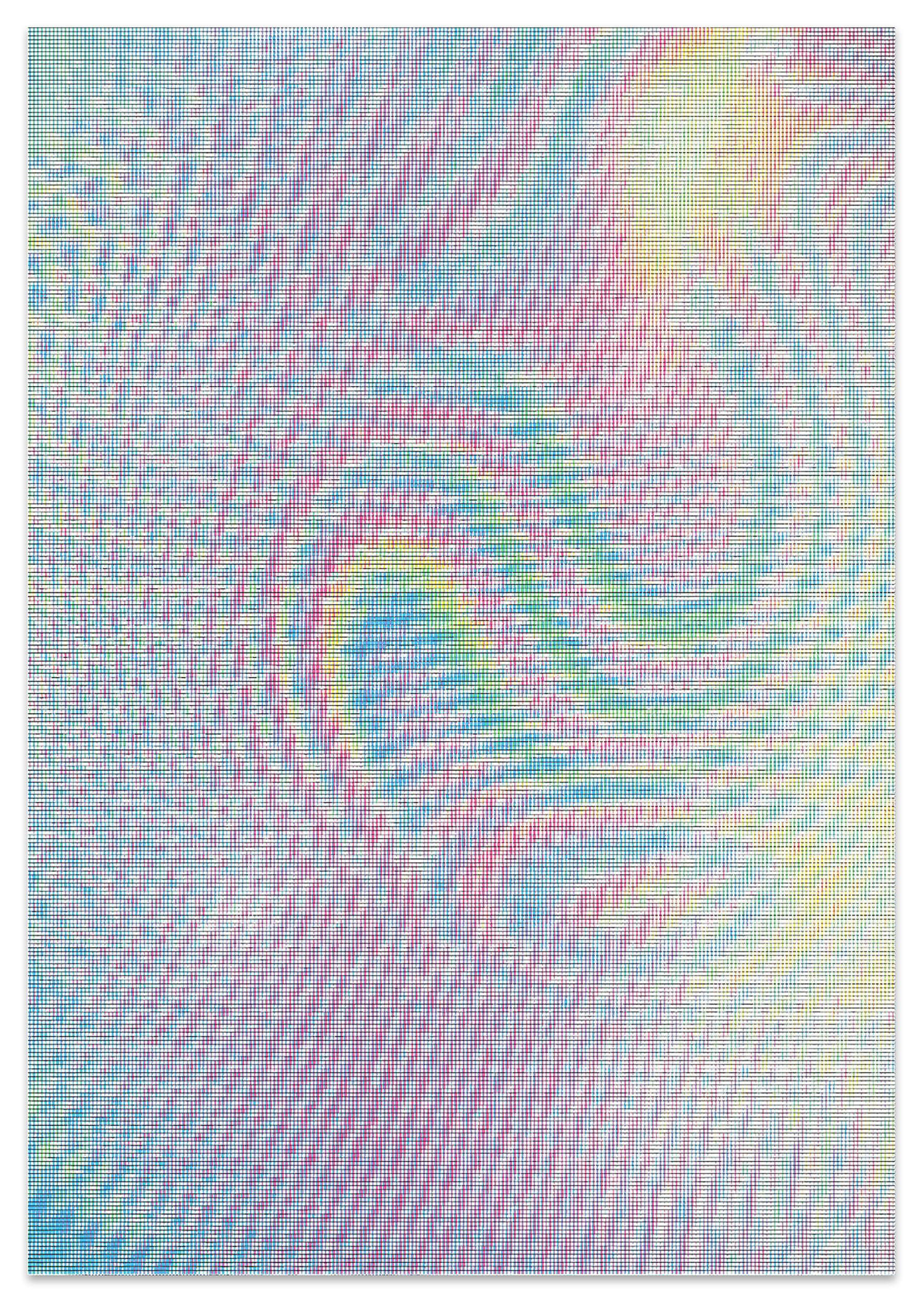

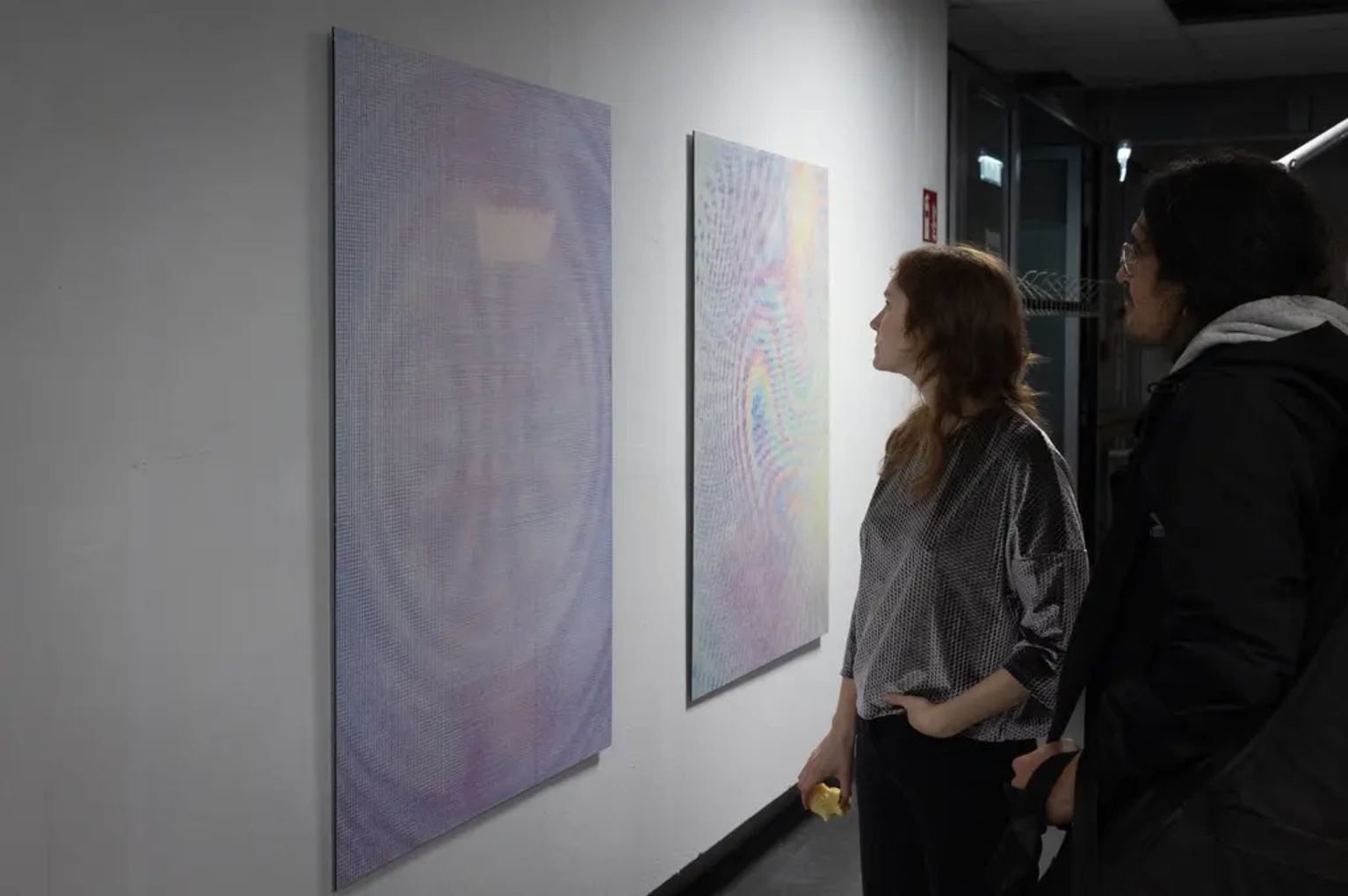
Interferences only emerge through interaction, like photographing a screen and seeing patterns appear. Screen interferences embody the impermanence of digital culture, raising questions about authenticity, authorship, the aura of art and the evolving nature of art in a digital realm.
The artworks themselves are dynamic and ever-changing. Each photograph captures a unique, temporary state of the piece, creating a personal interaction that evolves with every viewer. Depending on the camera, the angle, and the light conditions, the applied interference is either disruptive or subtle. The act of capturing an image becomes part of the creative process.
The outcome is unpredictable and shaped by collaboration. The audience’s actions, like taking a photo, introduce chance, making each interaction a distinct version of the artwork. There’s no single, fixed form; the piece evolves with every engagement. The works are evolving through entropic reproducibility in their digital version.
For this series of work, I explore methods of (re)production that utilise custom software (JPEG to g-code) and a CNC robot that can be used for carving and plotting using pens, a paintbrush and acrylic paint. This robot enables me to create intricate and complex geometries with precision, ensuring tight tolerances, allowing even the smallest details to be rendered accurately, a key element for this project.
However, gaining control in one aspect relates to loss of control in another. Mechanical drawing approximates the ideal digital input and adds its own artefacts, either due to limited resolution or due to the “blind”, unsupervised, mechanical application of paint. These artefacts, in turn, come in patterns. Patterns that lead to interference with the original image and eventually the creation of something new. The machine's limitations become the work's semantic core.
This project is supported by the AFK (Amsterdam Fund for the Arts) and Cultuurfonds/Tijlfonds.
D1Q6 Potts - Competing Interpretations by STUDIO 101010
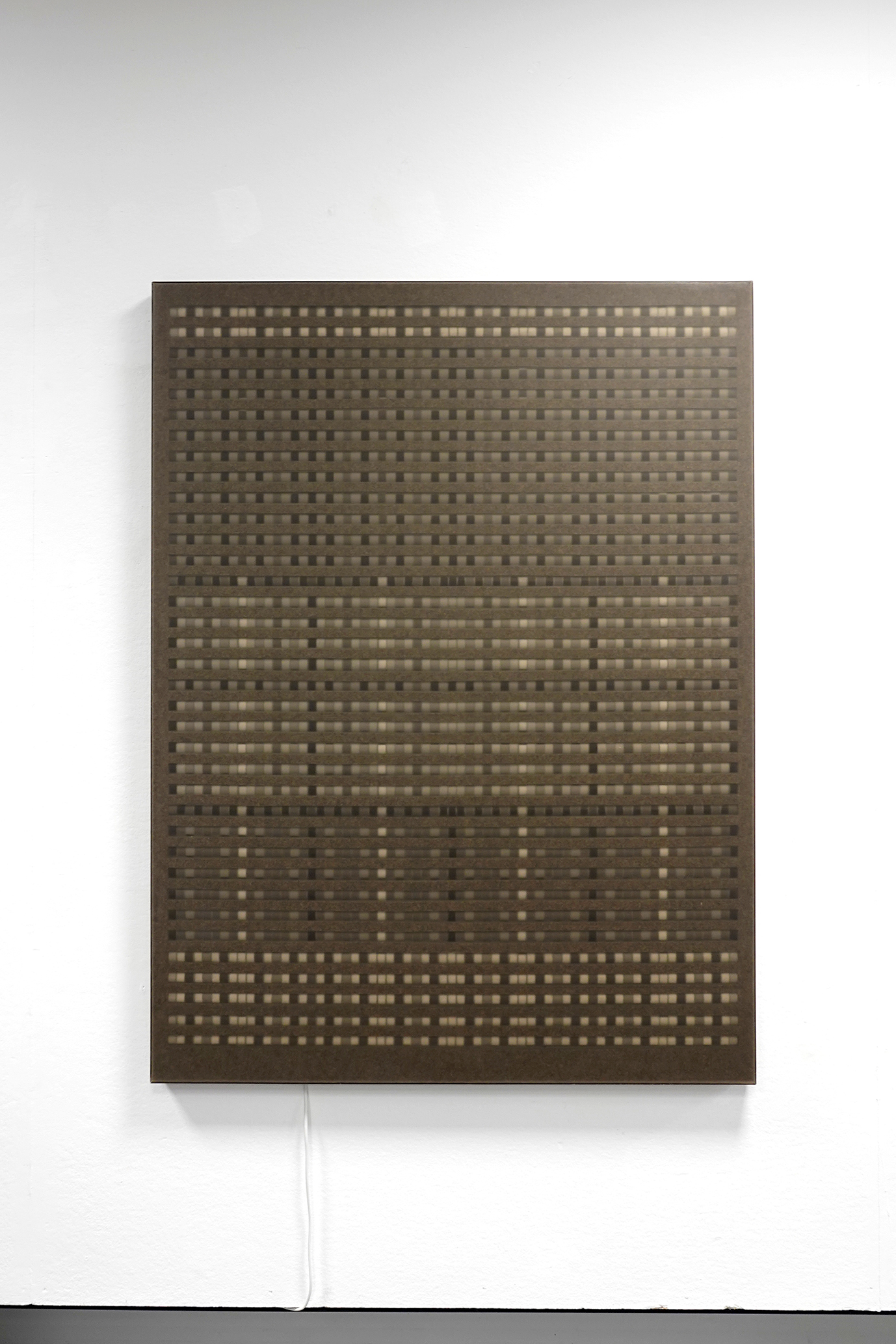
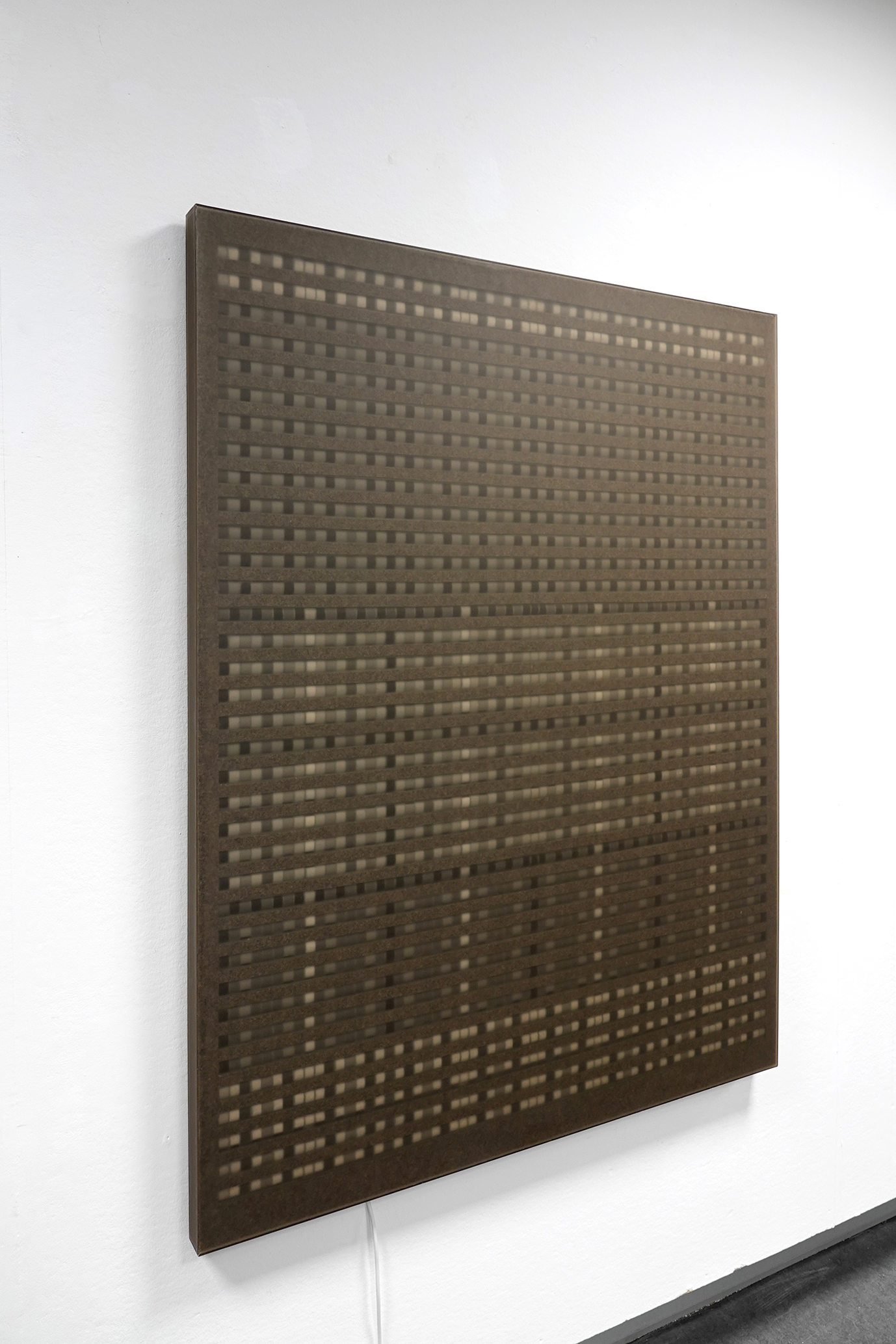
This kinetic artwork features a surface made of wool felt encased in semi-diffusive tinted plexiglass, displaying rows of monochrome pixels that change slowly over time. Each line represents a different colouration of the same multiscale pattern, akin to diverse worldviews forming a set of opinions. Following a statistical physics simulation model, the rolls turn to reveal various patterns with a temperature-dependent correlation between neighbour rows. Two quasi-analogue wheels at the bottom allow for adjusting the temperature and the speed of the state update.
Viewers can change the simulation parameters at any time. Changing them does not restart the simulation or initiate movement, but alters the conditions for the further evolution of the patterns. This allows not only to have it running at a fixed level of complexity where the patterns have similar statistical properties, but also to watch how the patterns evolve after a change in the complexity parameter, such as the growth of spatial correlations when "cooling" the system from a high-complexity state or near randomness to a low-complexity regime. Or vice-versa, i.e. watching large regions of correlations decay under the fluctuations introduced when the temperature (the "complexity" or "entropy") is increased.
This piece invites viewers to explore coherence and entropy as opposing extremes, highlighting intriguing spatiotemporal structures in between. From randomly changing patterns, unbiased, free, yet overwhelming in complexity, to strong correlations that create a serene, predictable canvas with low complexity, the artwork encourages contemplation of observed structures and their dynamics in relation to personal psychology, societies, and the universe.
Material: tinted plexiglass, wool felt, canvas, PLA thermoplastic, custom electronics, software and stepper motors.
Availability: Open for commissions. Please contact us for details!


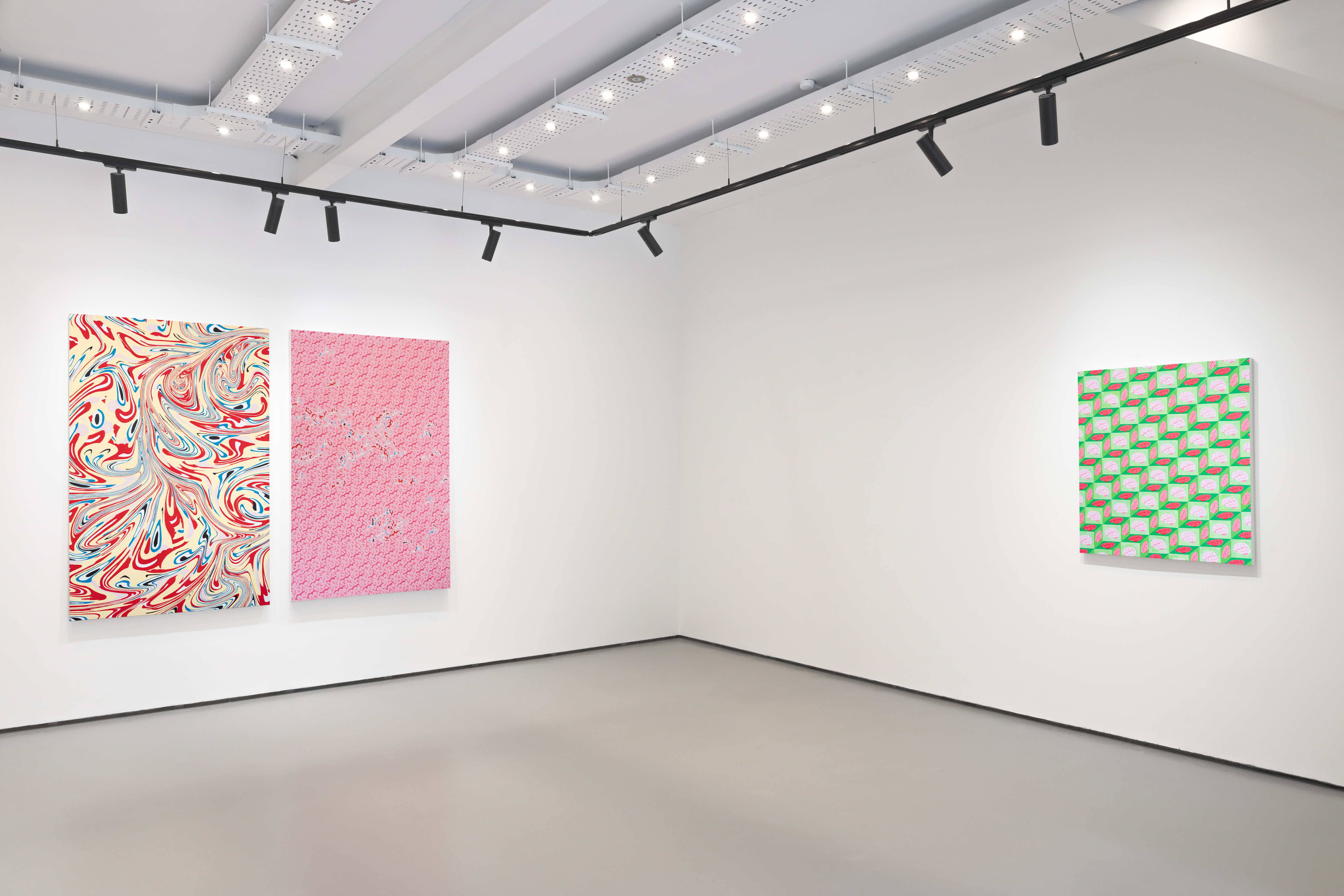
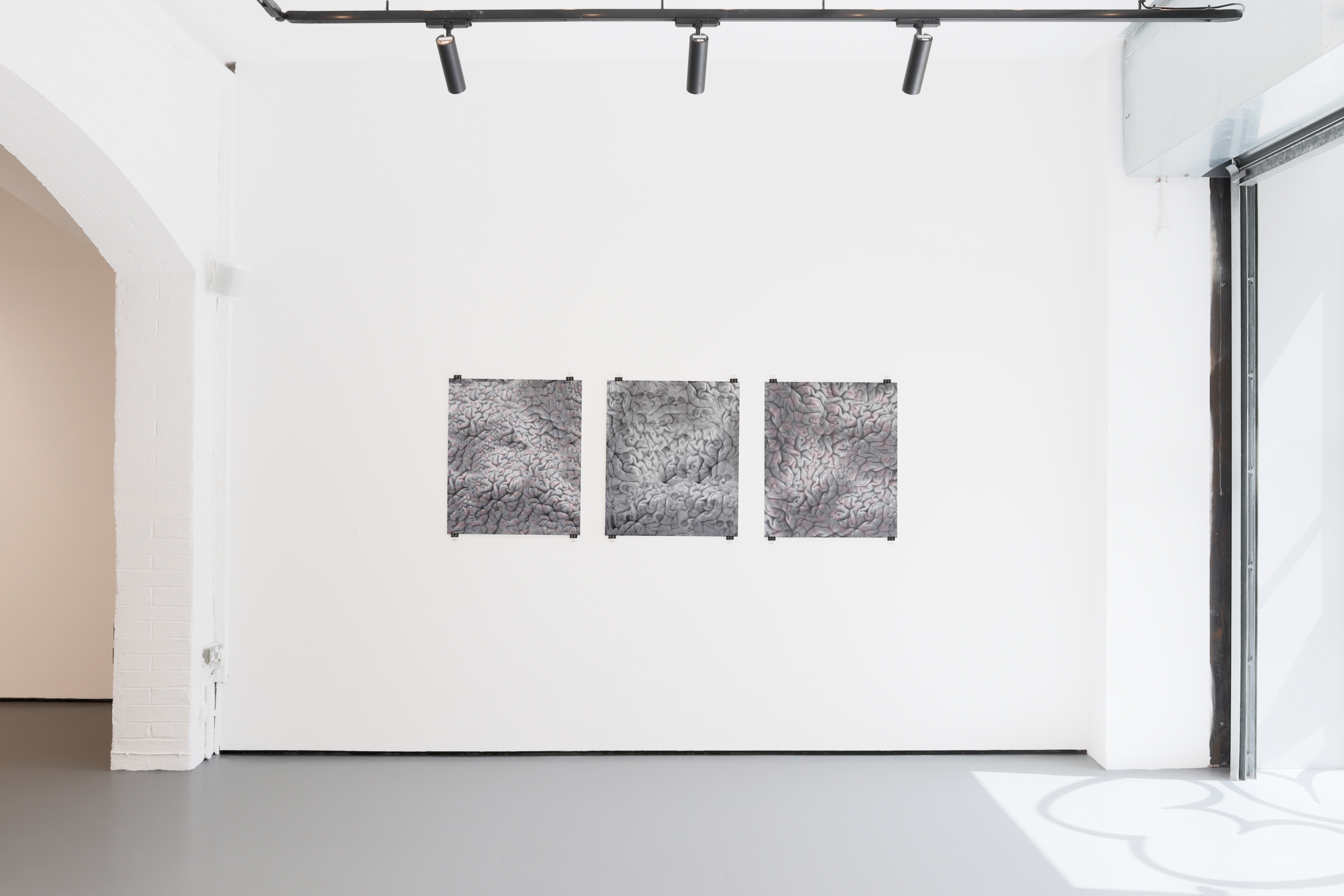
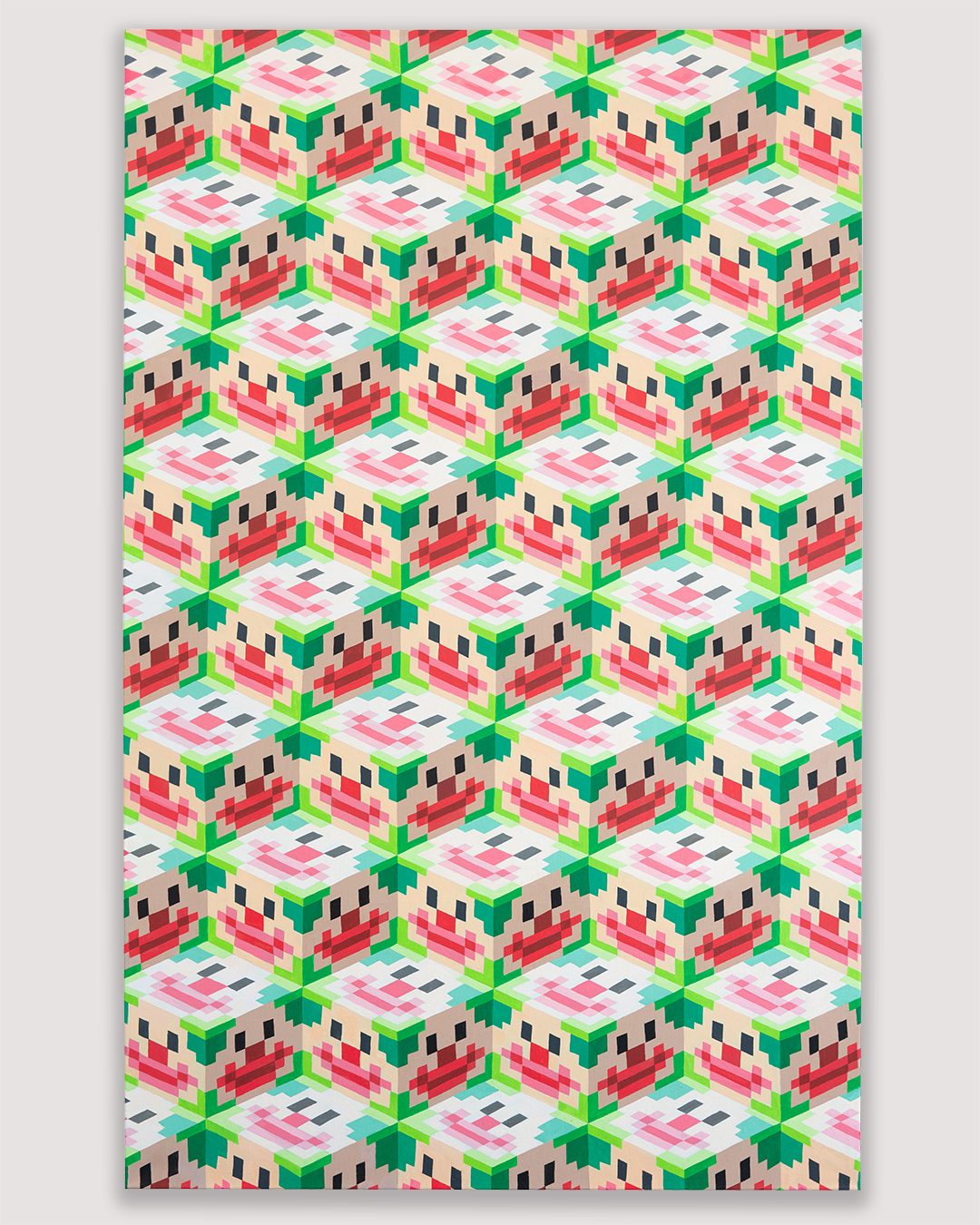
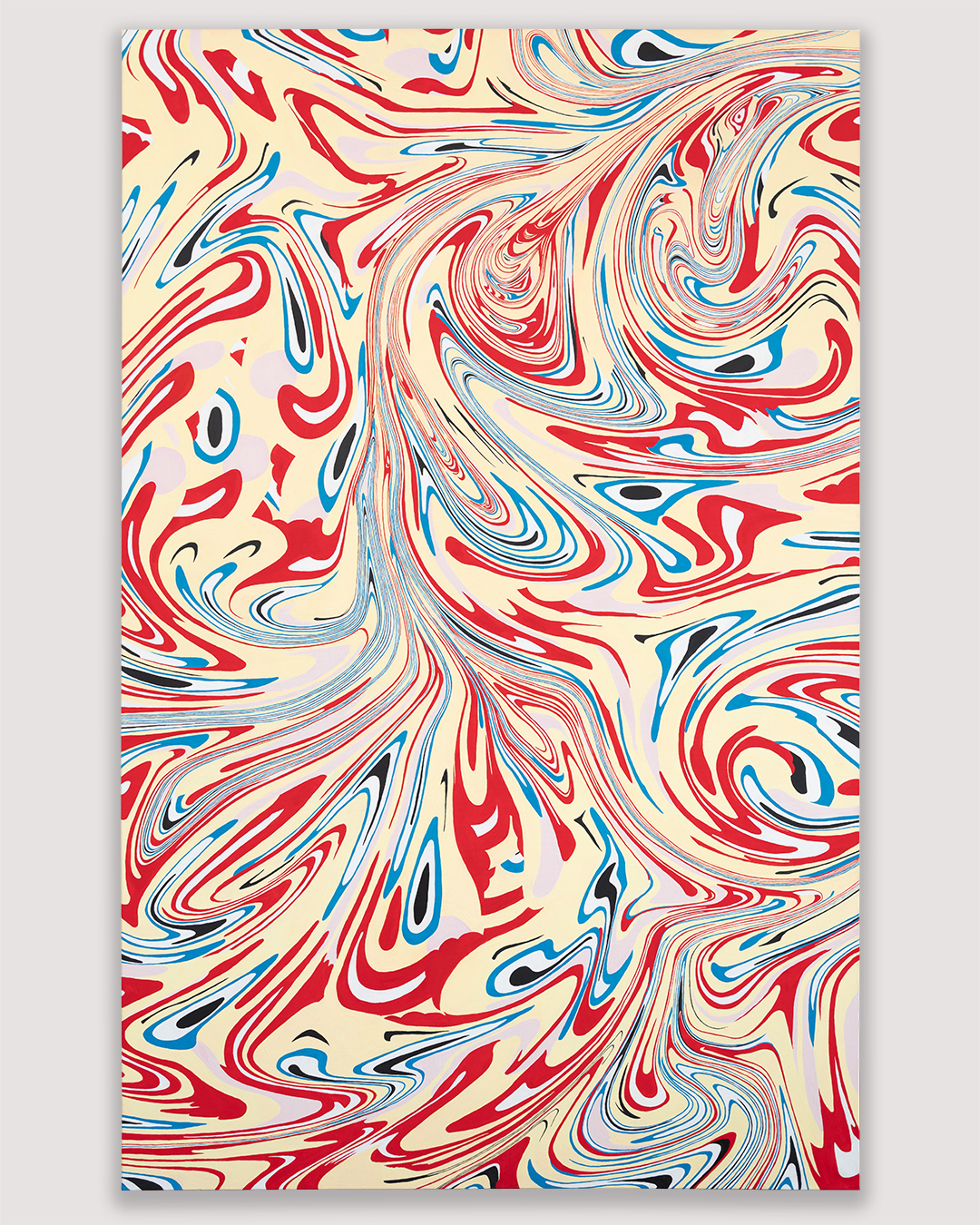
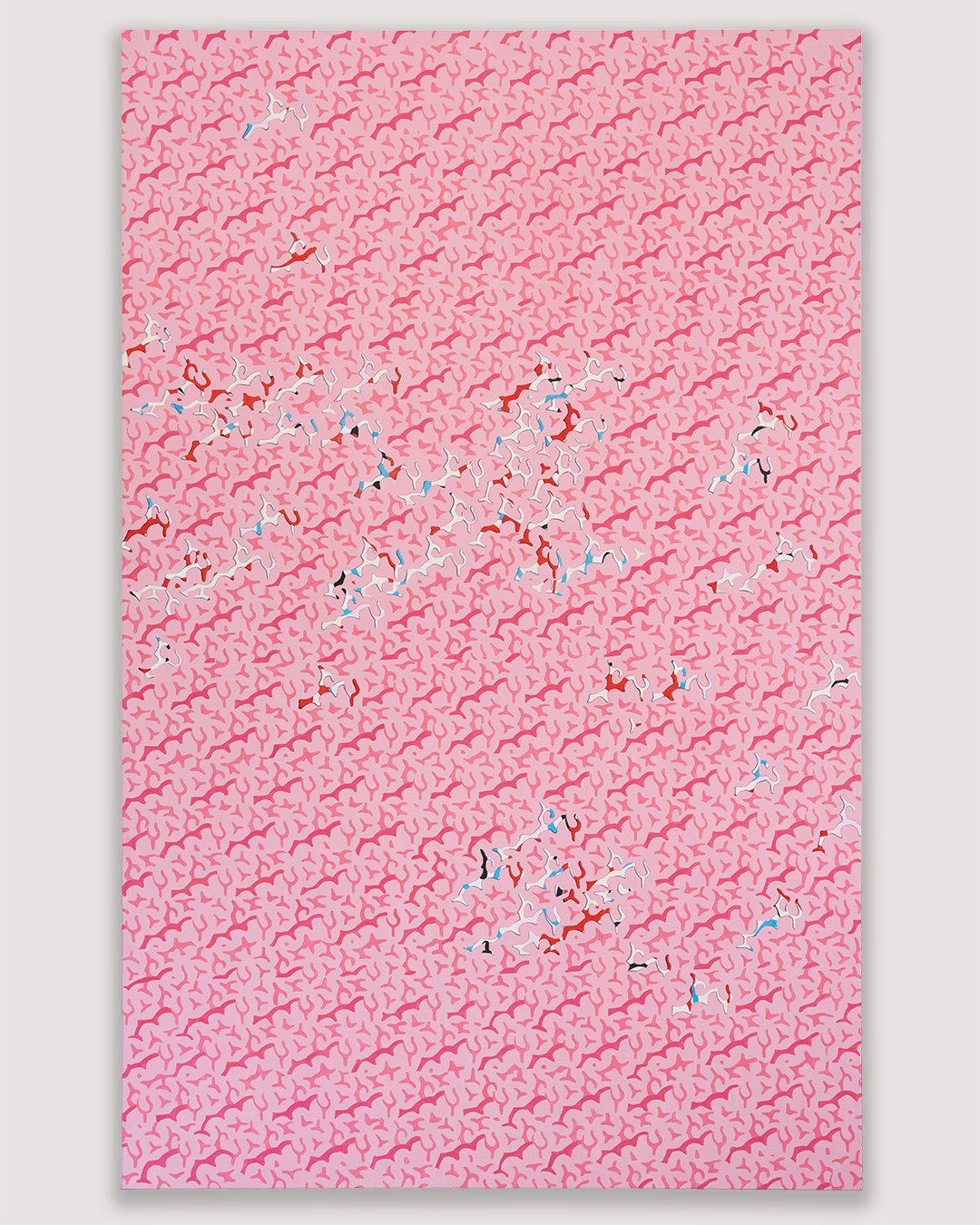


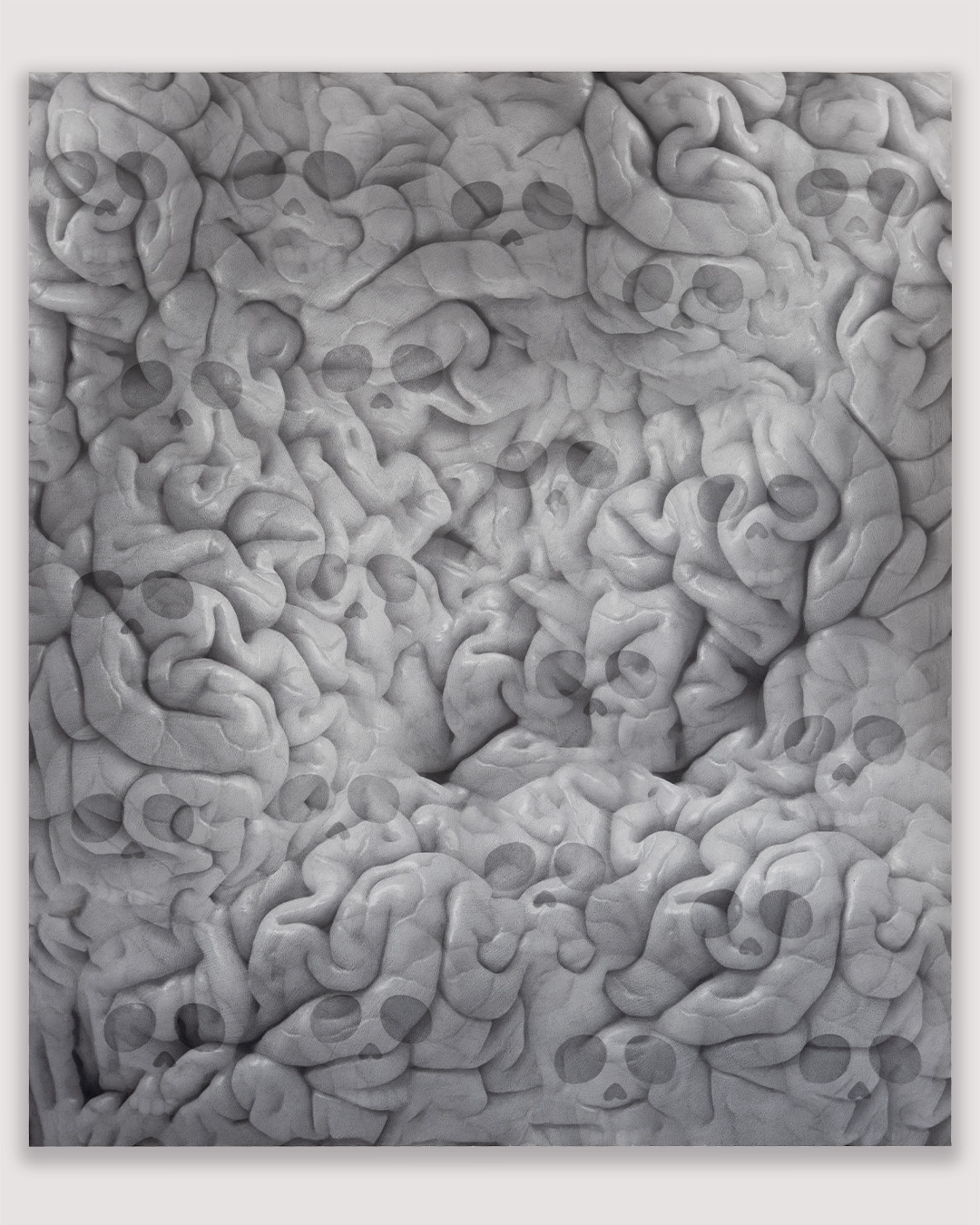


We often find ourselves as a pawn in the interplay between the internal and external worlds. There is a certain unease that comes with being alone with one's thoughts, as the mind can often wander to dark and unsettling places. In such situations holding on too patterns can do both, provide stability but also drive destructive circular thinking.
My artistic practice is a reflection of this duality, where I explore the visual metaphor of creating patterns as a means of coping with the complexities of the human experience. I am driven by a deep fascination with repetition, pattern, and the meditative qualities of the creative process.
Intrigued by the ways in which digital tools and technologies can shape and personalise shared experiences, I incorporate elements like emojis, 8-bit images, and memes into my work. These seemingly clumsy forms of communication become a way of expressing unsettling thoughts disguised with innocent symbols.
Embracing these common and impersonal visual languages, a bridge between the personal and the universal is created, inviting the viewer to engage with the work on a deeper, more relatable level with comforting imagery to hold on to when the mind gets lost in unsettling thoughts.
In recent work, I have been experimenting with the use of three emojis as a starting point to explore tonality, layering, and abstraction. The repetitive use of these symbols establish order and predictability in stark contrast to the concepts the emojis and their combination symbolise.
Identifying patterns in the stimuli our external and internal worlds produce is our brain’s approach to categorise information and minimise it for us in order to be able to process and act on it. This includes periodic structures like daily routines or ordering objects in space, but also intuition and emotional reflexes. These patterns reduce noise and surprises and offer security through predictability. Structures also allow us to sense deviations from the regular and respond to them consistently. Patterns can also be found in cognitive processes such as circular reasoning and pondering providing stability and confirmation through feedback loops. The occasional all-destructive “what if all this is a facade?”, disrupting the calm and structured surface, exemplifies the fundamental fragility of the security our pattern thinking provides. And these destabilising tendencies can develop into established thinking patterns, too.
Similar to the effect of the patterns themselves, the clear, in a sense primary, colour palette of the emojis and the semantic satiation achieved by their repetitive use, temporarily softens the otherwise dramatic concepts behind the emojis and lowers the threshold for the viewer to safely access and engage with the multi-layered works on a deeper level.
Embracing the meditative qualities of the execution of an artwork is a fundamental part of my practice. Through a visibly slow, methodical, and repetitive approach to drawing and painting, contrasting the fast sketching process using digital tools, I establish a sense of stability and calm.This foundation of repetition and meditation serves as a flexible sounding board, allowing for room to reflect on trauma, doubts, and uncertainties for myself and the viewer.
Ultimately, my artistic practice is a reflection of the human condition, a testament to the power of the mind to both create and destroy, to conceal and reveal. My mission is to develop a universal visual language enabling me and a broader audience to share these difficult, often unsettling, themes with others.
Barn to stable @stadsgalerij Breda NL


Slaap Lekker, Acrylic on paper mounted on aluminium panel, 88 x 98 cm, 2022
Mutter “Biennale Halloween, Amsterdam NL, 2023
![]()
![]()
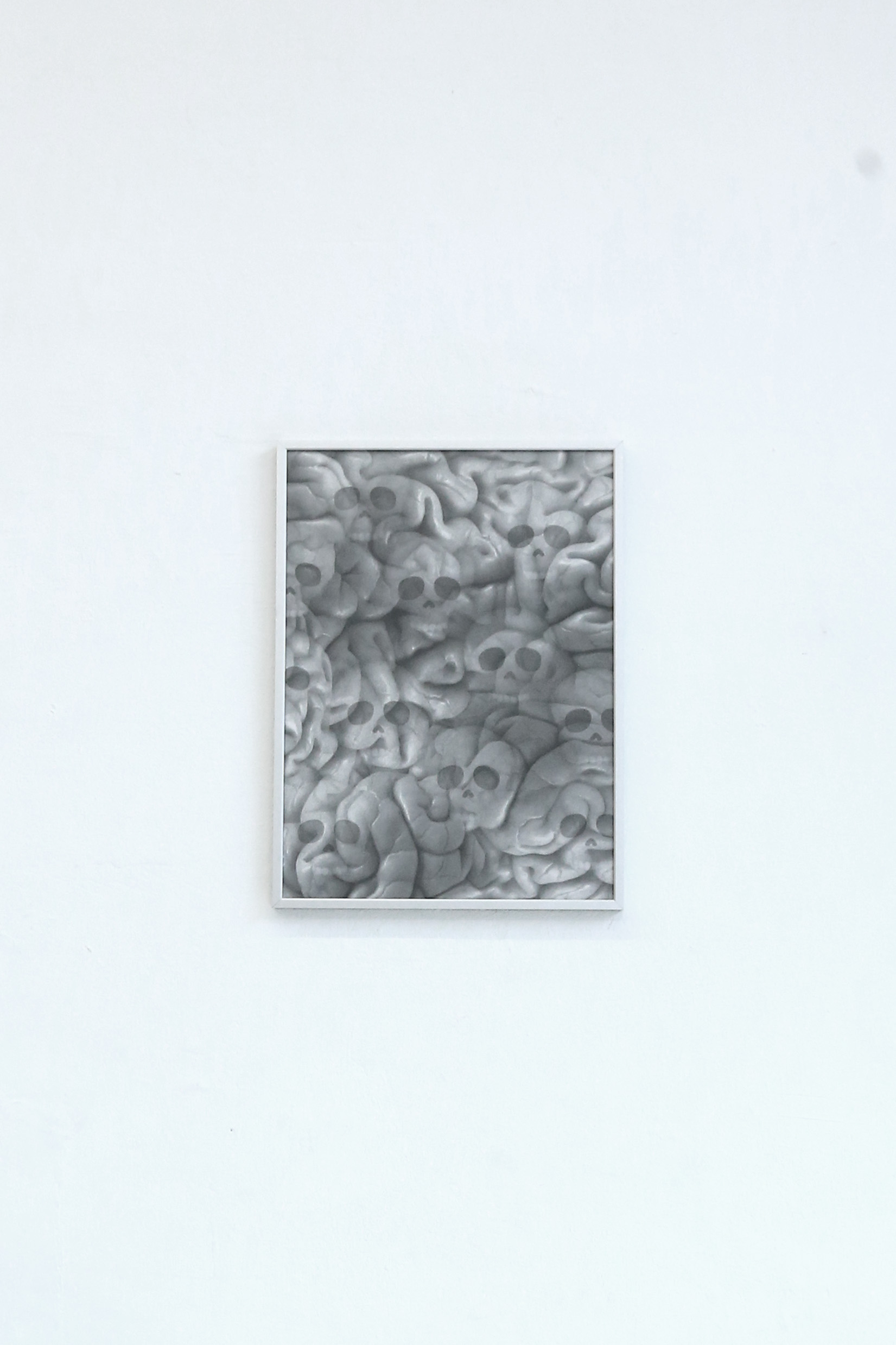

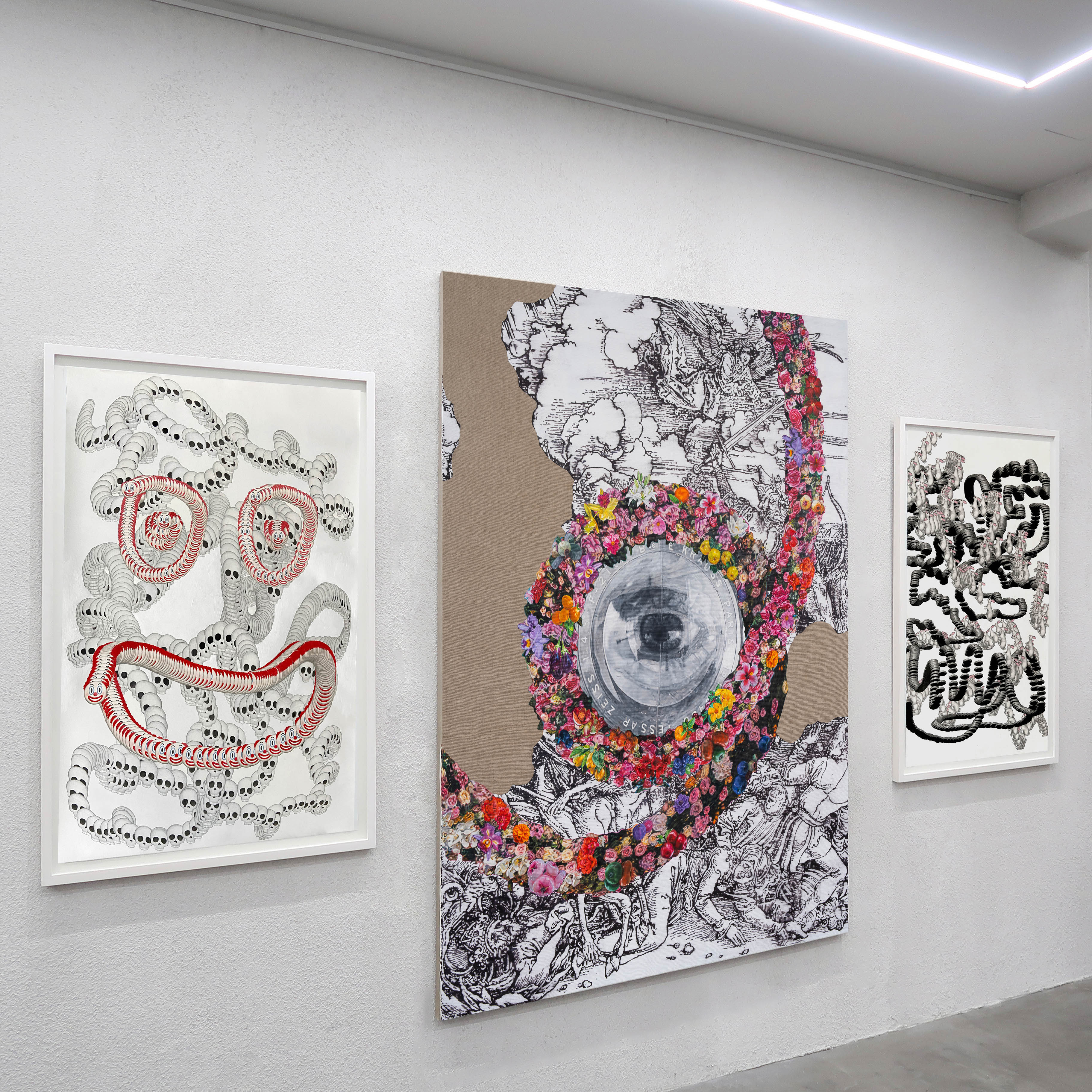
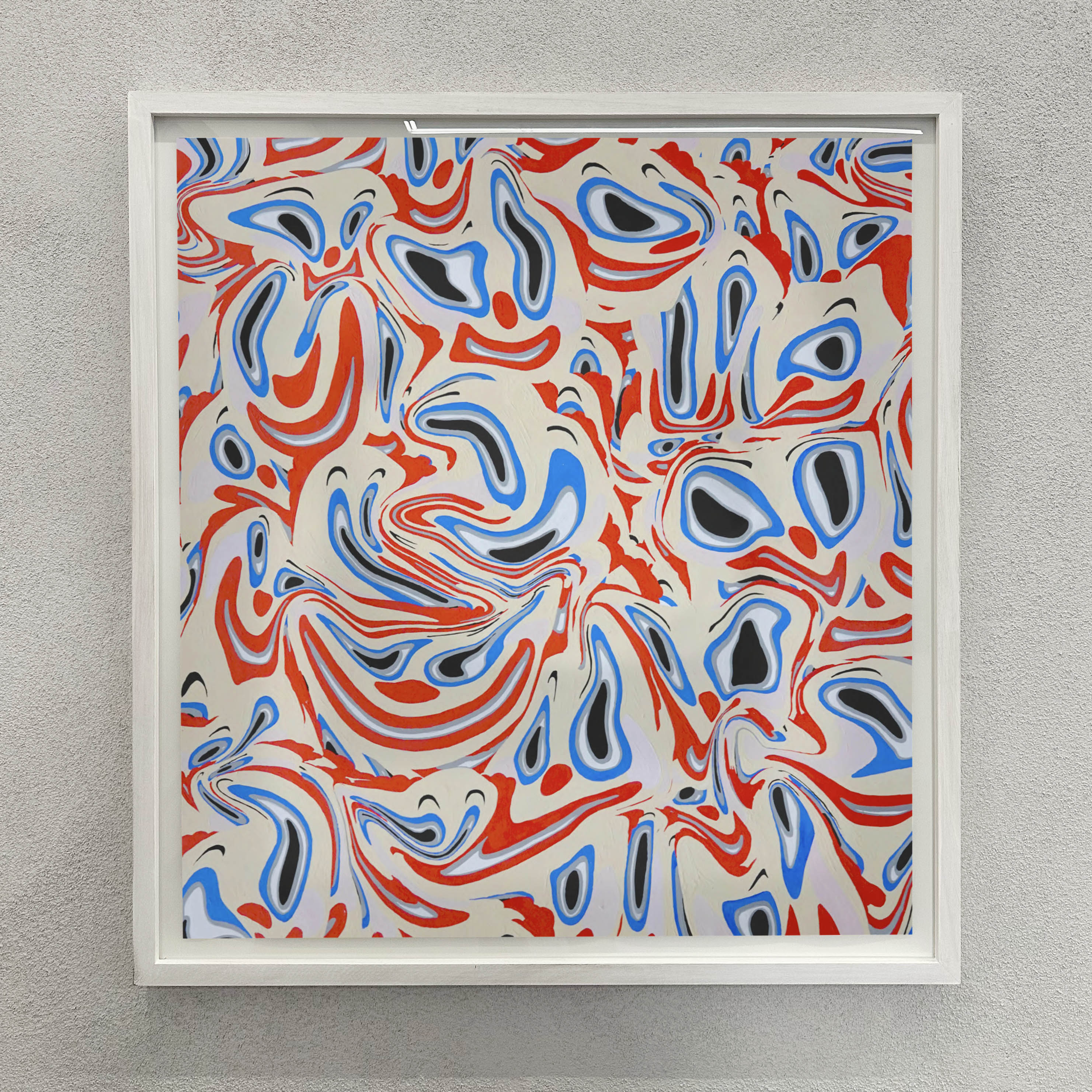

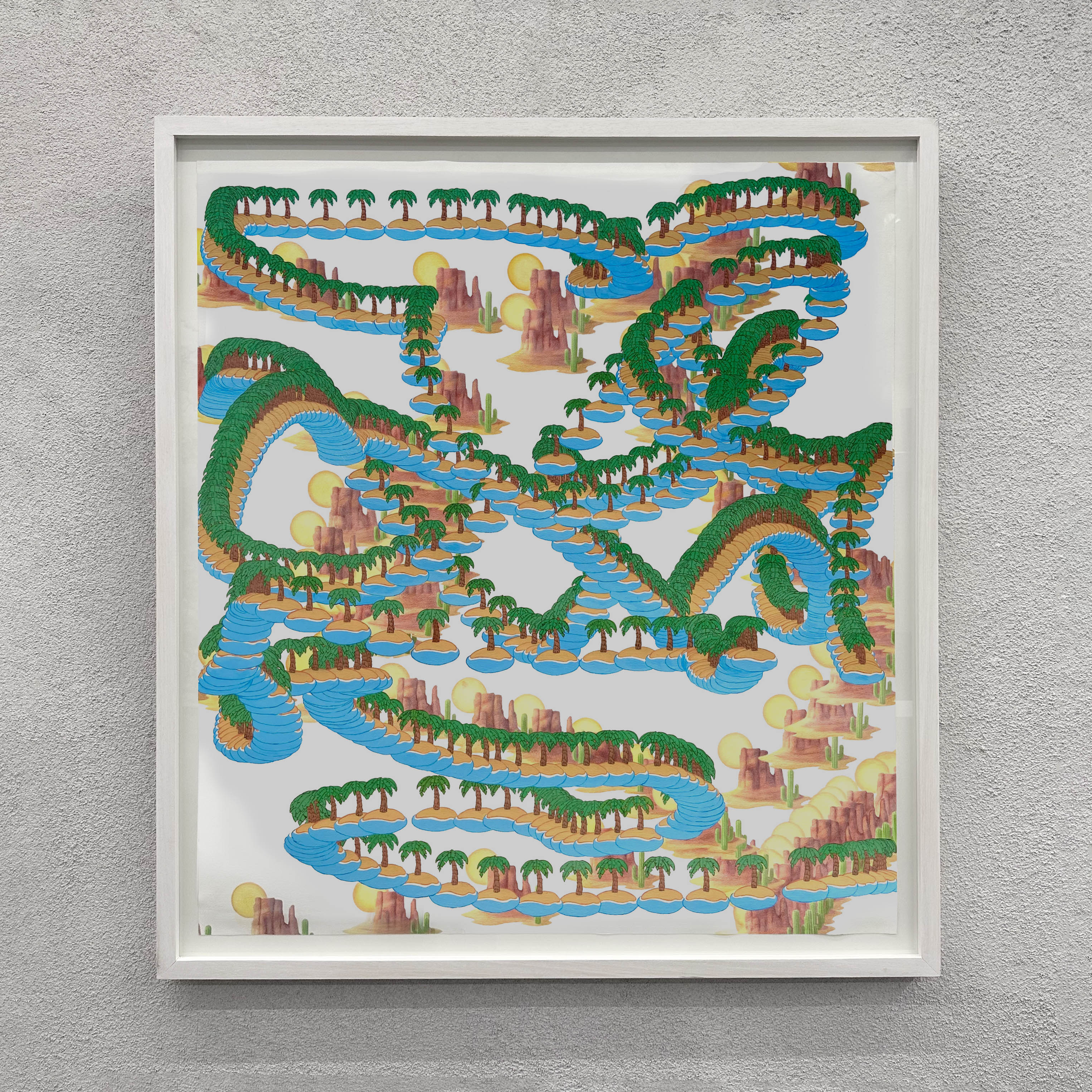
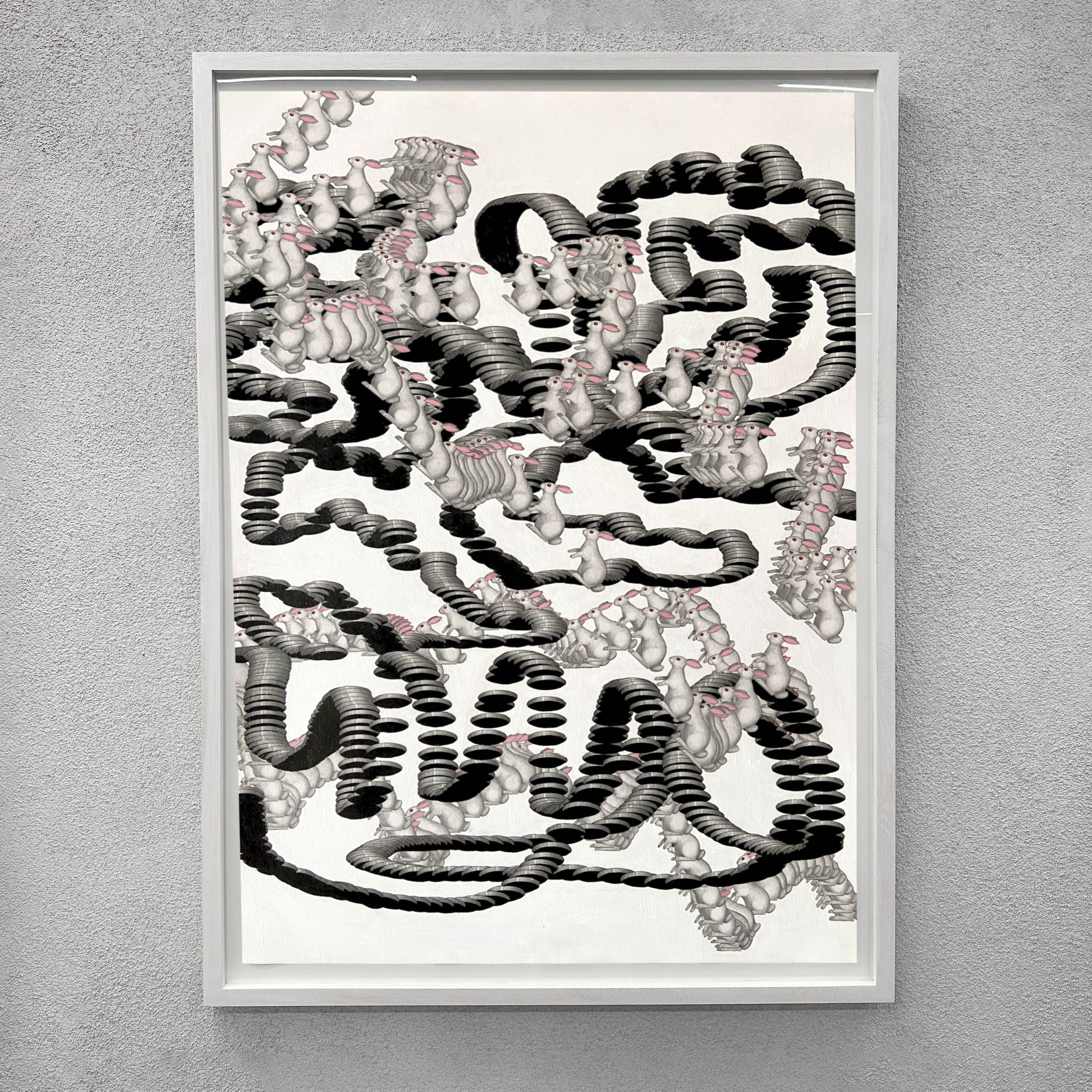
Once a revolutionary proposition that predicted humans' inevitable co-existence with intelligent machines is what the 21st-century people call "ordinary life". Our corporeal lives are intertwined with the digital sphere to the point we’re oblivious to the fact that much of our reality isn't real anymore. Logistically, mentally, as well as physically dependent on machines, computers, gadgets, and apps, our post-human existence is turning out to be post-ordinary. And the homonymous group show featuring Paraskevi Frasiola, Pavle Pavlović, and Einari Hyvönen, is exploring how our everyday reality deformed under the influence of ever-present technology. POST-ORDINARY is conceptualized by Saša Bogojev and presented at Plan X in Milan from the 24th of February until the 25th of March, 2023.
- Saša Bogojev